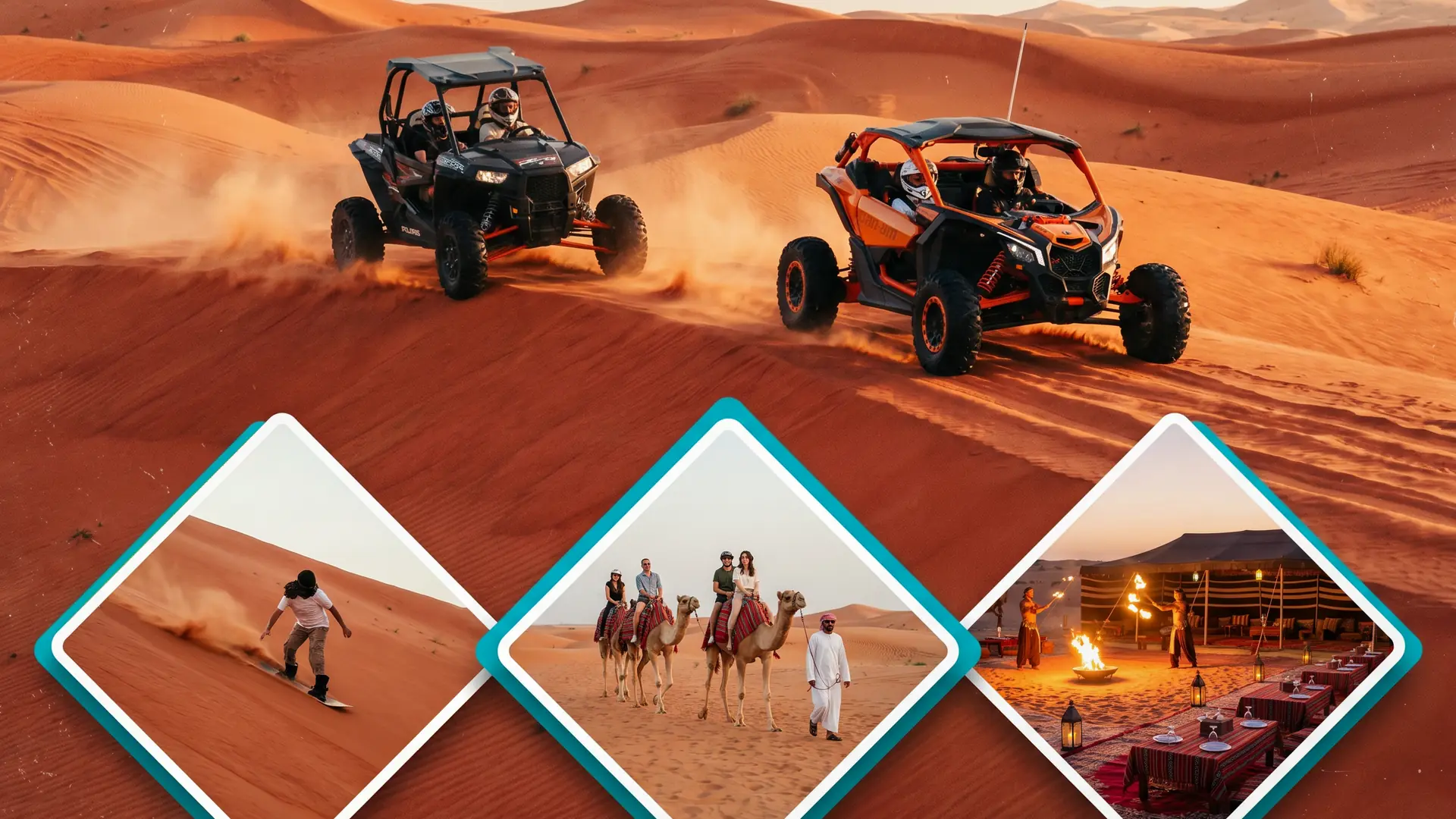
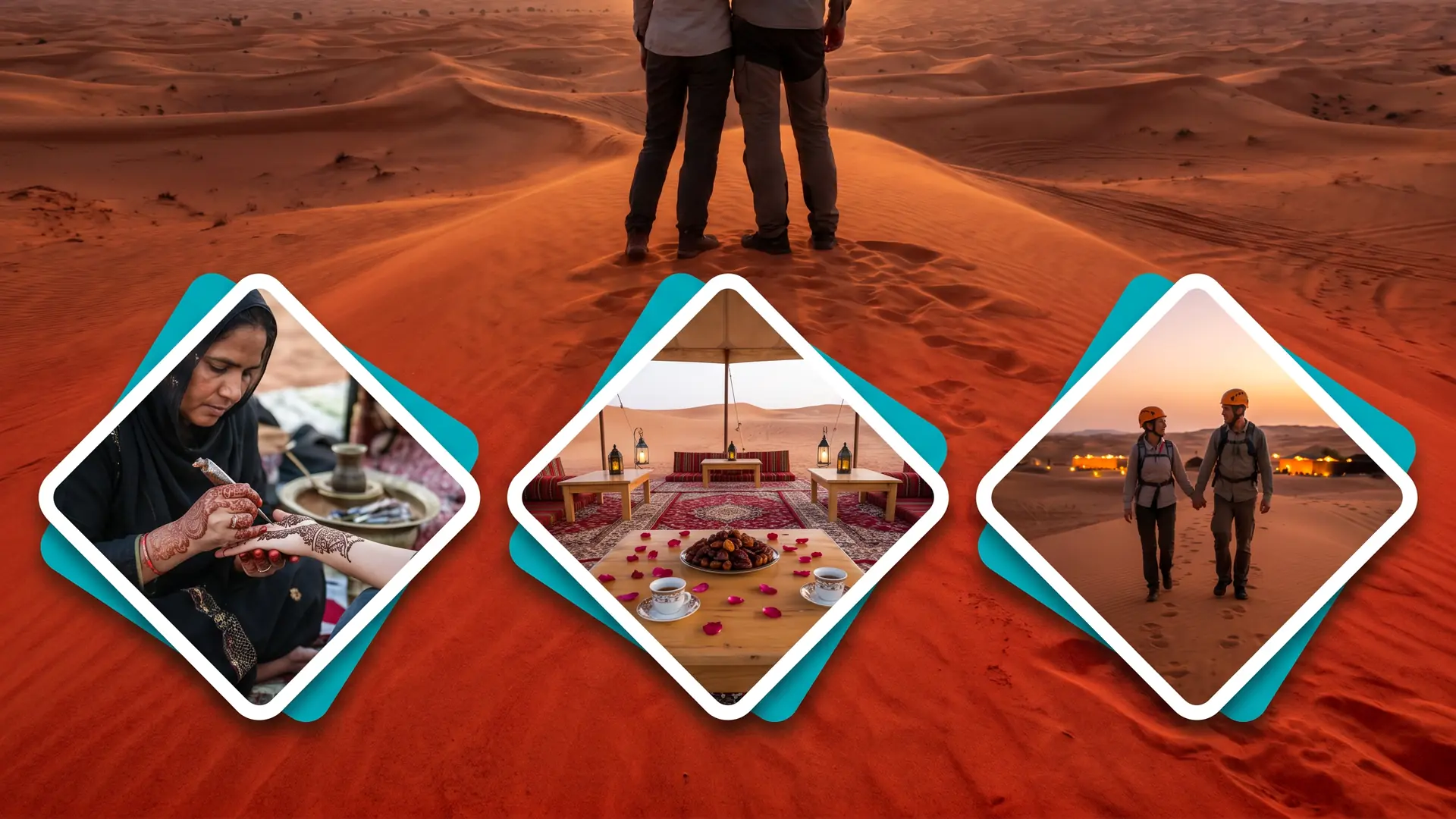
What does the sand at Al Lahbab actually feel like under a set of wheels?
Loose and fine on the crests, firmer and more compact low in the bowls. Al Lahbab's sand is a genuinely different material from the flatter ground closer to the city, and that difference is what makes the dune shapes here so much more dramatic.
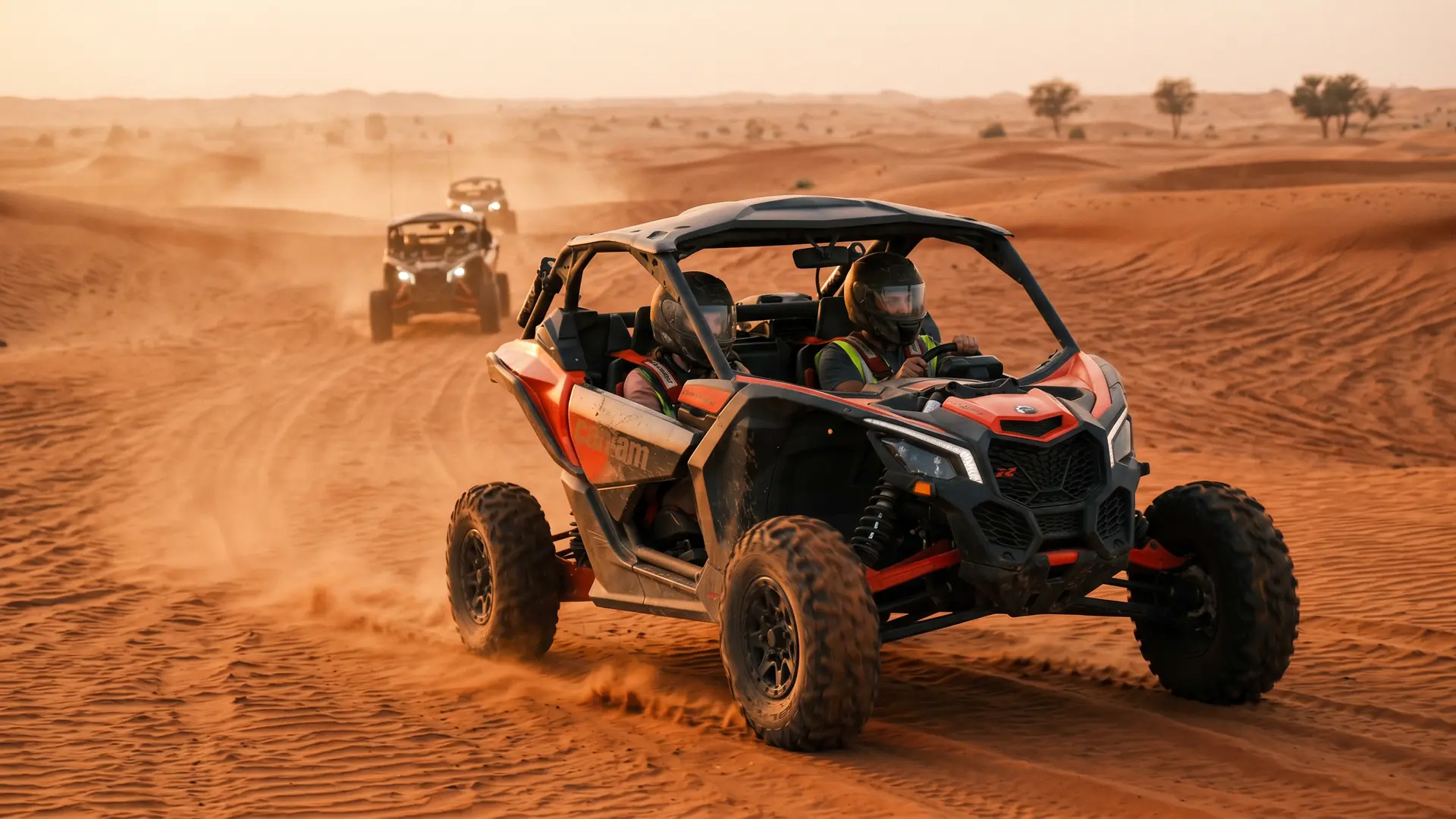
Sand is not one substance, whatever the postcard photos suggest. Out at Al Lahbab it runs fine and dry across the tops of the dunes, the kind of grain that pours through your fingers and barely holds a footprint. Drop down into a bowl and it changes: slightly more compacted, a touch more moisture held under the surface from whatever settled overnight, enough grip that a buggy's tyres bite instead of spin. Guides read this without thinking about it, choosing lines along firmer ground and steering around the softest faces where a machine can bog down fast.
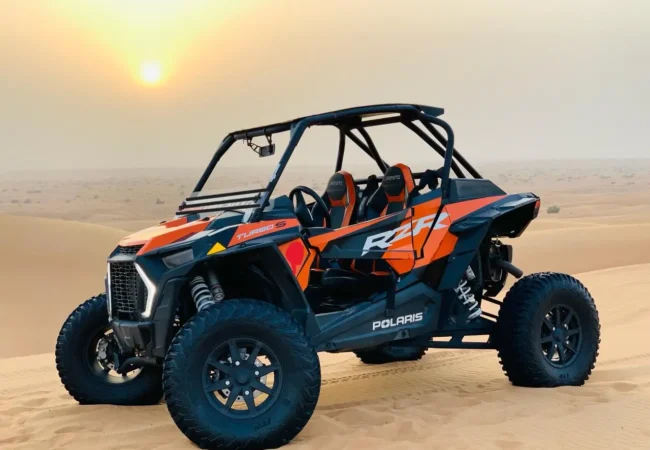
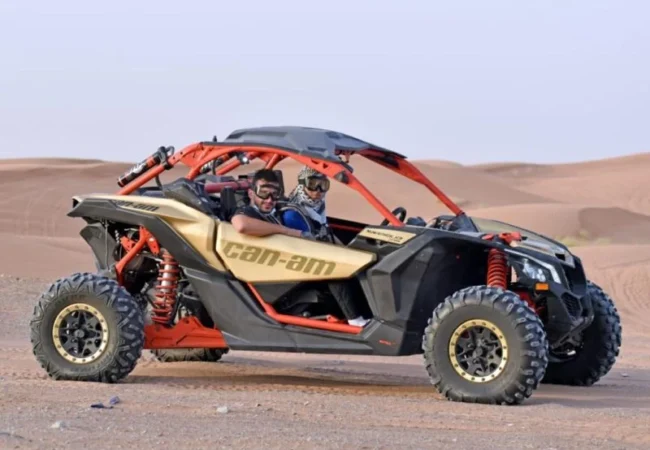
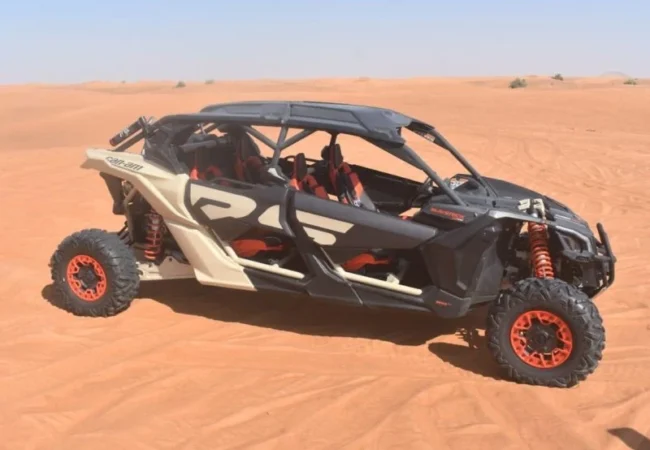
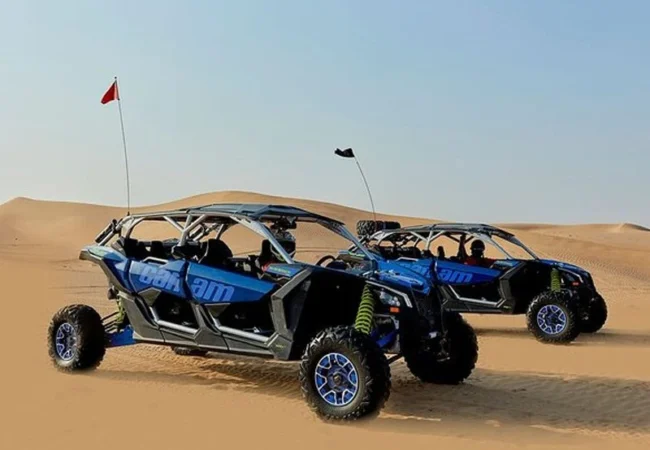
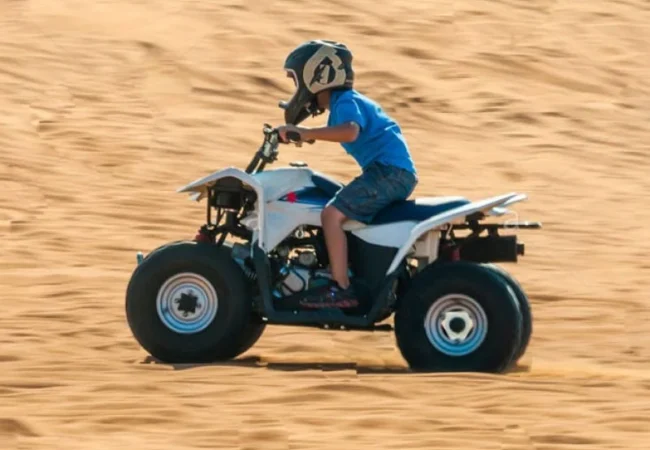
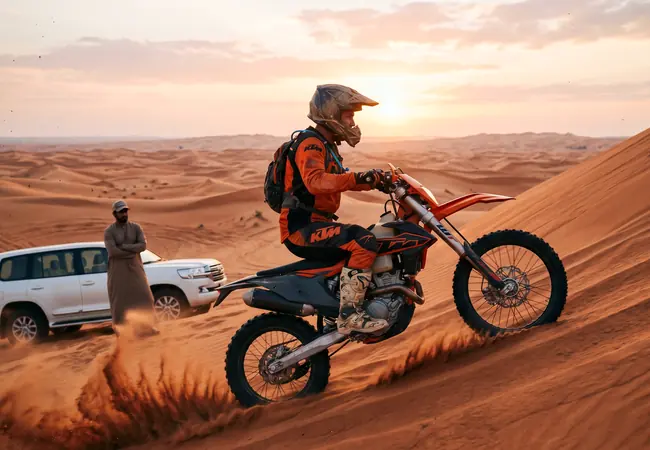
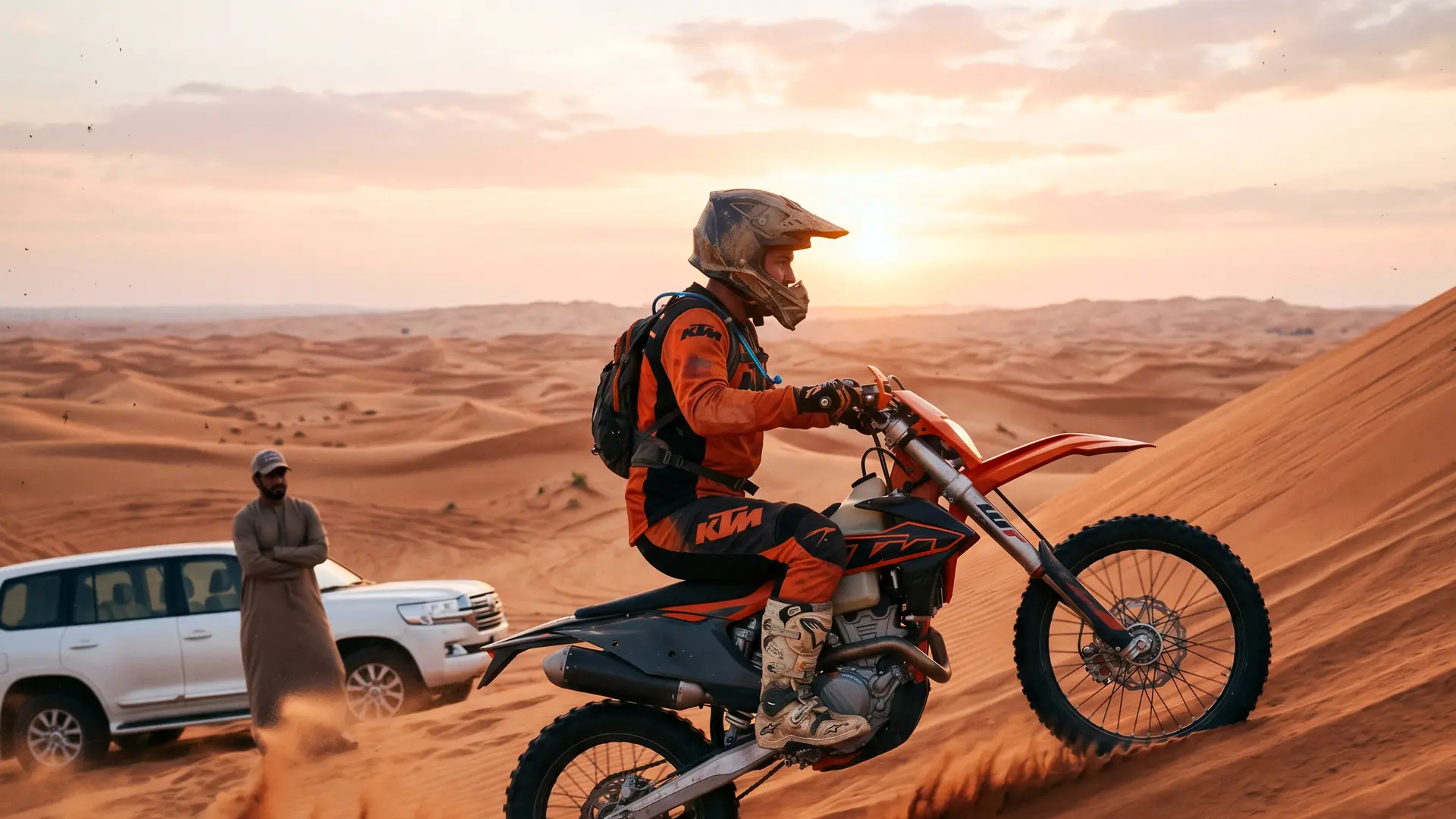
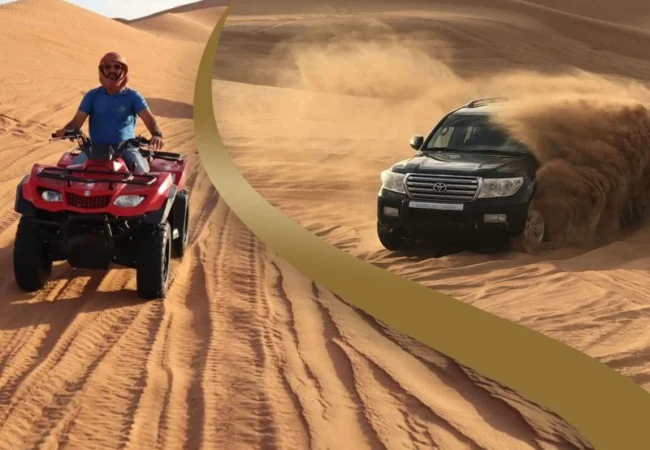
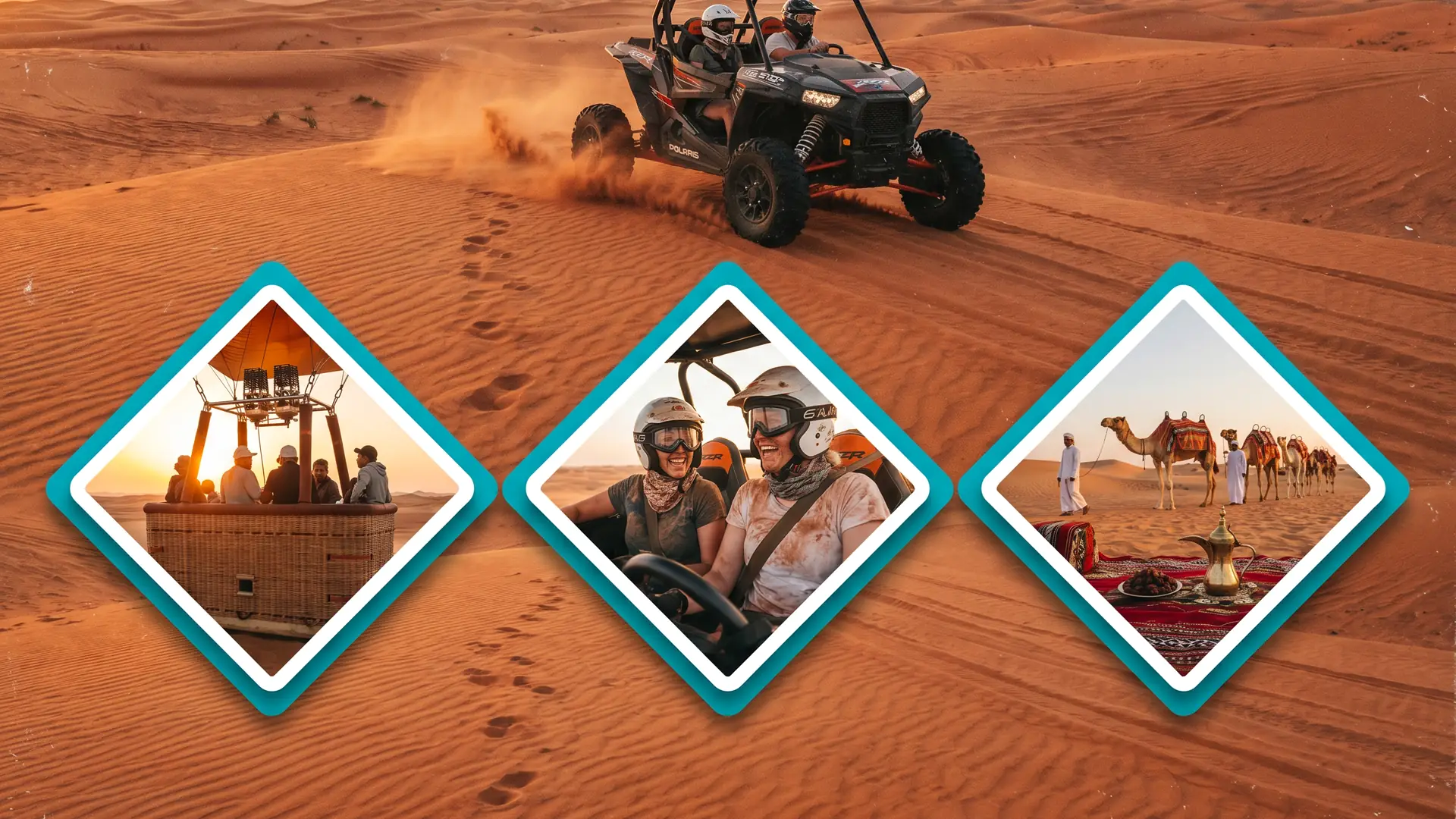
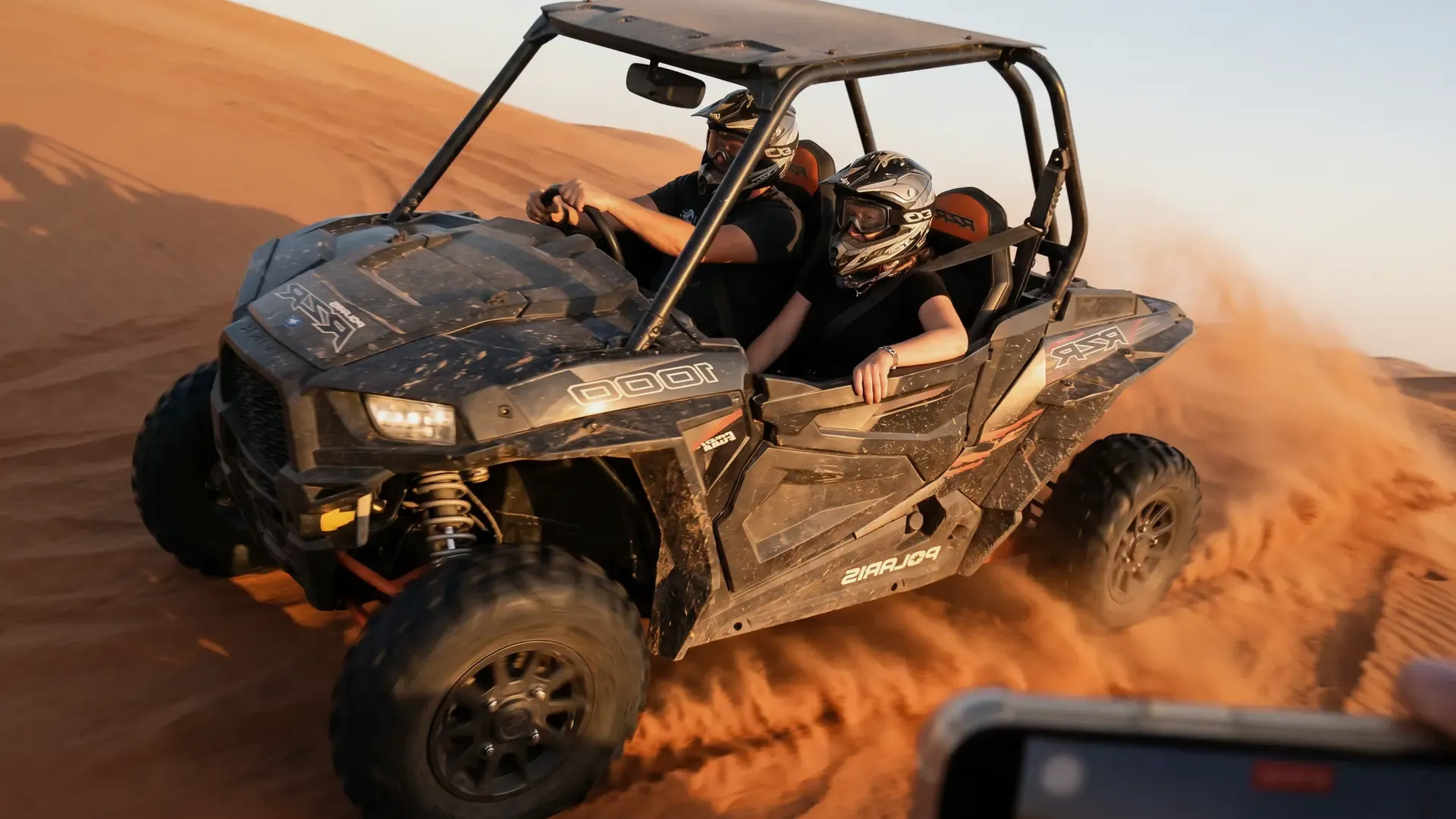
The shape of the land follows from the sand itself. Al Lahbab builds into proper bowls, ridgelines and standing dunes that can run several storeys high, because the grain here is fine and mobile enough to pile up steeply before it slides. Closer to the highway, where the sand has been driven over for years and mixed with a coarser base, the dunes flatten into low humps that barely qualify as terrain. That is the practical reason buggies, quads and dirt bikes from the nine-machine fleet all run this specific stretch instead of the sand nearer the road: the dunes only get interesting once the sand has been left alone long enough to pile up on its own terms.
For a first-time driver, the texture is the first thing that registers, usually within the opening minute of the warm-up circuit. The wheel goes light and vague on the crests, then suddenly finds grip again on a harder patch, and learning to feel that shift through the seat and the steering is most of what the guide is actually teaching before anything steep starts.
How much does the desert change between morning and late afternoon?
More than most first-timers expect. Morning sand is cooler and firmer after the overnight temperature drop, while late afternoon brings softer, warmer sand and a much deeper colour as the light rakes low across the dunes.
Desert sand loses heat fast once the sun goes down, and Al Lahbab is no exception. By early morning the surface has cooled and firmed up overnight, which is one reason morning sessions feel slightly different to drive through: the sand holds its shape better underfoot and under a tyre, and dust kicks up less because the grains are sitting closer together. It is a genuinely different surface than the same dune presents nine hours later, not just a cooler version of the same thing.
By mid-afternoon the sand has been absorbing direct heat for hours and the top layer turns looser and drier, part of why pacing gets managed differently as the day goes on. Late afternoon is where the light does the most obvious work, though. As the sun drops, it rakes across the dune faces at a low angle instead of straight down, and the red in the sand, which looks almost orange-brown under a midday sun, deepens into the colour everyone photographs. Shadows stretch out along every ridge and the bowls that looked flat at noon suddenly show their actual depth. Groups on the evening buggy and BBQ combos get this light for free on the way to camp.
None of this is marketing language. It is a function of how sand behaves thermally and how low-angle light interacts with a textured surface, and it is the reason two people who rode the same dune at 9 AM and again at 5 PM will describe two different places.
What does a session actually do to your skin, your gear and the machine?
Fine red dust gets into everything within the first few minutes: shoes, pockets, camera seals, hair. It is mostly a nuisance rather than a hazard, and the helmet, goggles and closed shoes handle the parts that actually matter.
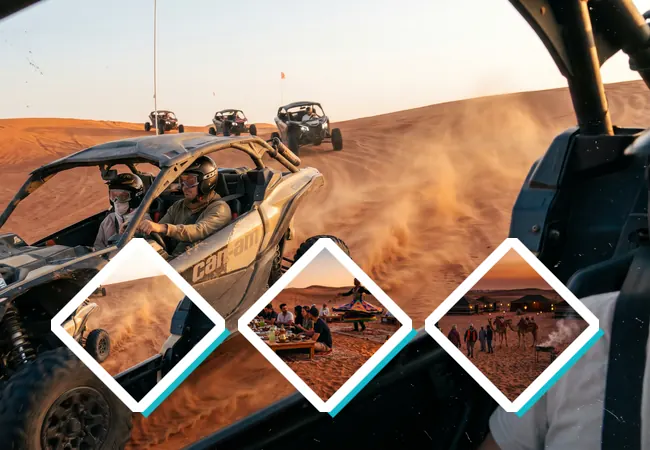
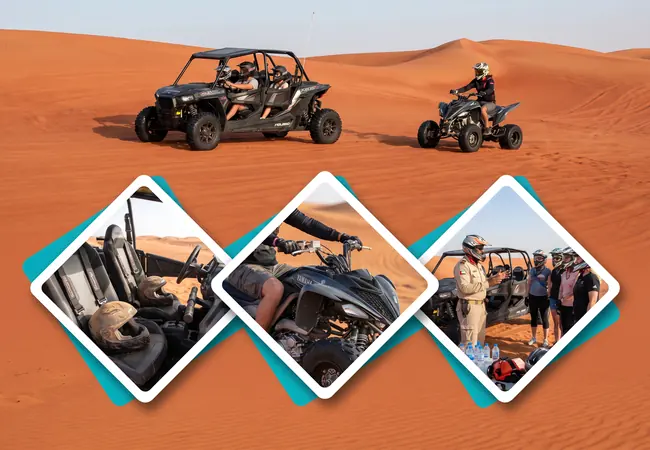
The sand at Al Lahbab is fine enough that it behaves more like dust than beach sand once a machine starts moving through it. A buggy or quad throws up a trail behind it, and depending on wind direction that trail can drift back over whoever is following in the line. Goggles are provided for exactly this reason, and putting them on is not optional if you are anywhere near the front of a group, because unprotected eyes in a dust trail is an unpleasant way to spend a booked hour. Full gear and what is included on every booking is covered in the safety section above.
On skin, the practical effect is dryness more than anything else. Fine grains work into open pores, mix with sweat, and leave a slightly gritty film by the end of a longer session, which is why most people head straight for a shower once they are back at the hotel. Clothing picks up dust in every seam and pocket and does not fully shake out, which is exactly why the standing advice is to wear something you would not mourn losing to the desert, and to leave a fresh outfit waiting back in the car.
The machines take a steady beating from the same dust, which is why the fleet gets a pre-ride inspection before every single session rather than a periodic one. Fine sand works into filters, seals and moving parts faster than coarser sand would, and a well-run desert operation budgets for that in its maintenance schedule rather than treating it as a surprise.
Is the desert really a different place in summer than in winter?
Yes, and not only because of the heat. Winter brings calmer air, sharper visibility and firmer sand for longer stretches of the day. Summer brings stronger, more frequent wind that reshapes dune crests and throws up haze that softens the horizon.
The temperature difference between a Dubai winter and a Dubai summer is obvious enough that it barely needs explaining, but it is not the only thing that changes out at Al Lahbab. Wind patterns shift with the season too. Winter tends to bring calmer, more settled air, so dune crests hold their shape for longer and visibility across the sand stays sharp enough to pick out ridgelines from a good distance. Summer brings more frequent gusts, particularly in the afternoon, and those gusts do physical work on the dunes: they lift loose sand off the crests and redeposit it a little further along, so the exact profile of a ridge ridden in March will have shifted slightly by August.
That same summer wind carries fine dust into the air even without a full sandstorm, and on the hazier days it softens the horizon and mutes the colour that makes late-afternoon photos so striking in the cooler months. It is a real visual difference, not just a subjective one: on a calm winter afternoon you can often see clean ridgelines stretching a long way out, while a dusty summer afternoon flattens that same view into a softer, browner haze.
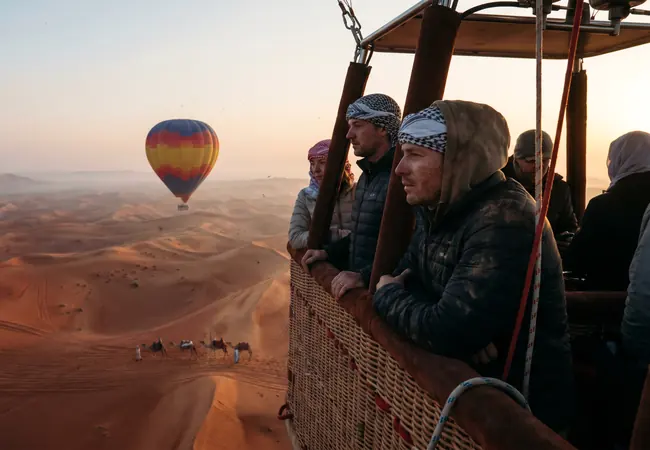
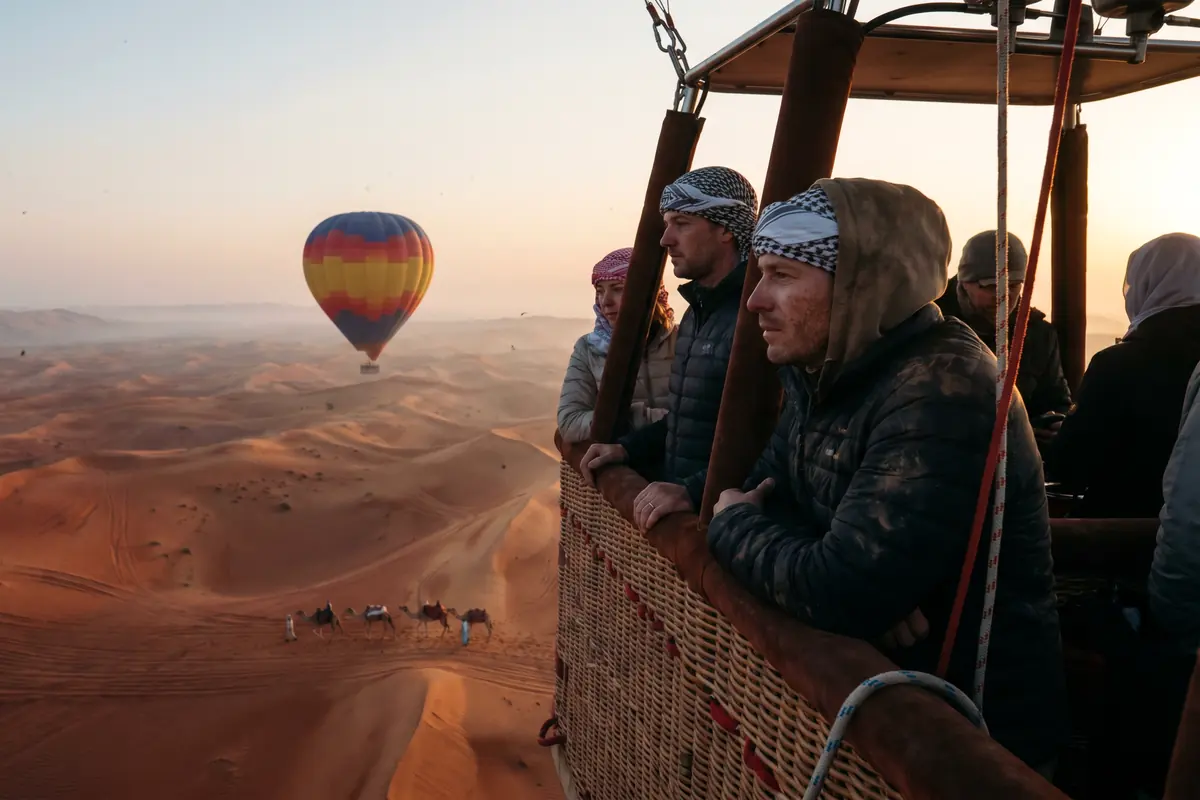
None of this closes the desert down. Sessions run year-round, and the operational adjustment in the hot months is about timing rather than terrain: slots move earlier or later in the day to dodge the worst midday heat, while the sand itself, wind and dust aside, stays rideable throughout. What changes is how the place looks and feels around you, not whether you can be out on it, and the same logic keeps the sunrise balloon flights flying through both seasons.
Is there any wildlife or plant life out among the dunes?
More than the empty-looking sand suggests, though most of it keeps a low profile. Desert plants cluster in the flatter interdune areas, and animal activity is easiest to spot as tracks in the sand rather than the animals themselves.
Al Lahbab looks like empty sand from a distance, and for long stretches of open dune it genuinely is. Life here concentrates in the flatter, more stable ground between the dunes rather than on the shifting crests themselves, where nothing can get a root down for long. Ghaf trees, the closest thing this region has to a defining tree, show up occasionally in these lower pockets, alongside scattered desert shrubs that manage on almost no water and go dormant rather than dying back completely once the driest months set in.
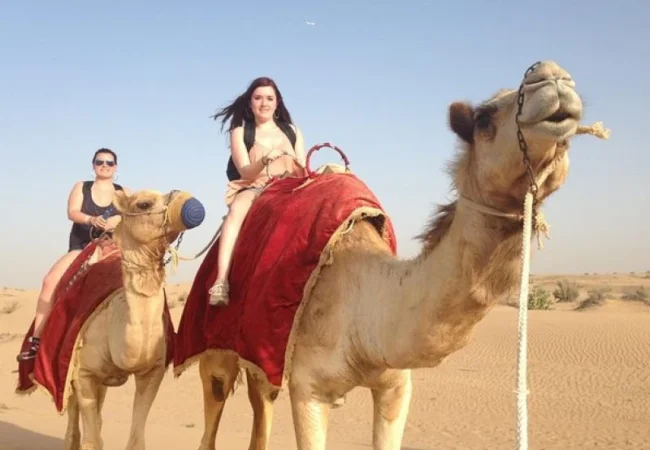
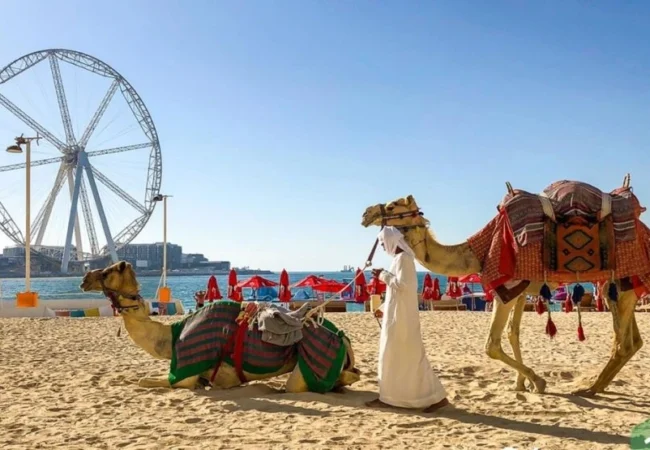
Animal life tends to announce itself in tracks before it shows itself directly, since most desert species here are more active at dawn, dusk or after dark than in the middle of a hot afternoon. Arabian oryx and gazelle live in protected reserves elsewhere in the emirate rather than on this working stretch of desert, but smaller residents are genuinely around: desert foxes, hares, and a variety of lizards and beetles that leave distinctive trail patterns across a fresh dune face after a quiet night. Spotting the tracks is more realistic than spotting the animal, and guides who have worked this ground for years can usually tell you what made a particular print without slowing down much to look. A camel trek across the same flatter ground is often the easiest way to notice this life, moving slowly enough to actually see it.
Birdlife is the easiest wildlife to actually see mid-session, with the odd falcon or kestrel working the thermals above the dune tops. It is not a wildlife safari and nobody should book it expecting one, but the desert is not the sterile, lifeless stretch of sand it can look like from a moving buggy.
How remote does it actually feel once you are a few dunes in?
Further than the short drive out suggests. Once you drop behind two or three dune lines, the highway noise disappears, the skyline is gone, and the only sounds left are the wind and your own engine.
Forty-five minutes is not a long drive by Dubai standards, and it is easy to assume the desert at the end of it still feels within reach of the city. It does not, not once you are actually moving through it. The dunes at Al Lahbab are tall enough and packed close enough that two or three ridgelines are enough to block a direct line of sight back to the road, and with it goes the traffic noise, the sense of a nearby highway, and any visual reference to how close the city actually is.
What replaces it is a kind of quiet that surprises most first-time visitors. Sand absorbs sound in a way that flat hard ground does not, so even the engine noise of your own buggy feels more contained than it would on tarmac, and when a group stops for a photo break, the silence that drops in afterward is noticeably complete. No skyline, no construction noise, no other traffic, just wind moving across a dune crest and whoever else is standing next to you. The return leg of a session is usually the point this really sinks in, once the pace slows and there is time to notice it.
It is a strange kind of remoteness because it is entirely reversible in under an hour, which is part of the appeal rather than a flaw. You are never actually far from help or a working phone signal, but the sensory experience in the moment, standing on a ridge with dunes in every direction and nothing manmade in view, reads as far more isolated than the map would suggest.
What happens to the terrain on a rare rainy or overcast day, and do sessions still run?
Rain is genuinely rare here, but when it happens the top layer of sand compacts and darkens for a few hours, which briefly makes for firmer, grippier riding before the surface dries back out. Sessions still run around it.
Rain in this part of the UAE is infrequent enough that plenty of residents go a full year without seeing more than a passing shower, and Al Lahbab is no exception. When it does happen, the effect on the sand is more interesting than destructive. A proper downpour darkens the surface within minutes and compacts the top few centimetres, which briefly firms up the dune faces and can actually make for better grip than the loose, dry sand riders are used to. It does not last. Sun and wind dry the surface back out within a matter of hours in most conditions, and the dunes return to their normal texture well before the next booked session.
Overcast days without rain are a little more common and mostly just change the light rather than the sand itself. Without direct sun, the deep red colour that makes late-afternoon photos so striking flattens out into a more muted rust tone, and the sharp shadows that usually define a dune's shape soften considerably. It still photographs well, just differently, and some visitors who have seen the postcard version of Al Lahbab in bright sun are surprised by how different the same ridge looks under cloud.
Sessions still run in both cases. Genuinely heavy rain or an active thunderstorm gets treated the same as strong wind or a sandstorm: a safety call, not a scenery preference, and bookings get moved to the nearest available slot rather than refused outright. Given how rarely it actually rains here, this is a scenario most visitors never encounter, but it is not treated as an edge case operationally. It is simply the version of desert weather nobody plans a trip around.
People also search for
Guide FAQ
Does the sand colour change depending on where you are on a dune?
Yes. The crests catch more direct sun and read a lighter, more orange-red, while the shaded lower slopes and bowl floors hold a deeper, almost brick-red tone. It is one reason photos taken low in a bowl look so different from ones taken on a ridge top minutes later.
Do sandstorms actually happen at Al Lahbab, or is that overstated?
They happen, though not often, and they are rarely the dramatic wall-of-sand seen in films. Most are a period of strong wind carrying visible dust rather than a full whiteout. When conditions cross into genuinely reduced visibility, sessions are rescheduled rather than run through it.
How windy does it typically get out on the dunes?
Variable, and noticeably breezier on open ridge tops than down in a sheltered bowl. Afternoons in the warmer months bring the strongest gusts. It rarely stops a session outright, but guides do factor wind into which route and pace they choose that day.
Does the desert smell like anything in particular?
Mostly it smells like heat and dry mineral dust, with a faint green scent from desert shrubs after any rare rain. Closer to camp in the evening, that gets replaced fast by charcoal smoke and grilling BBQ.
Can you actually see stars out there at night?
On evening sessions and camp bookings, yes, considerably more than anywhere in the city. Once you are a few dunes from the road with no direct light source nearby, the sky opens up in a way most visitors staying in Dubai's hotels never see during their trip.
Does the ground ever get slippery, or is it always just soft?
Soft is the default, but compacted low ground and any patch that held overnight moisture can feel closer to firm-packed dirt than sand. It is not slippery the way wet tile is, but a sudden shift in grip between two neighbouring patches is precisely what a guide is watching for during that opening circuit.
Are there insects to worry about out there?
A few, mostly harmless. Beetles and the odd desert spider are more visible in their tracks than in person, since most stay under the surface or under vegetation during the heat of the day. Evening camp sessions see slightly more insect activity than a midday buggy ride.
Why does the sand look darker in some photos and brighter red in others?
Light angle and moisture, mostly. Low, late-day sun and any recent damp both darken and deepen the red. Straight overhead midday sun flattens the same sand into a paler, more washed-out tone, which is why professional photos of this area are almost never shot at noon.
Does the operator ever reshape or maintain the dunes themselves?
No. Nothing about the dune shapes is artificial or maintained. Wind reshapes the crests naturally over weeks and months, and the only human input is the warm-up circuit, which is simply flattened, existing ground rather than anything built up.
Is one part of Al Lahbab noticeably different from another?
Yes. Ground closer to the operating base sees more consistent riding and gets slightly more compacted over time, while sand further out stays looser and less disturbed. Guides vary the exact route between sessions partly for this reason, so a group rarely rides the exact same track as the group before it.
 AED 599